Insights from our Elders
A Path to Health and Self-Reliance through Tradition

In treacherous and chaotic times, how did the Indigenous ancestors maintain balance? What can we learn from them?
And how do you define healing? What traditions support that process?
We’re talking about cultural sovereignty, and why traditional Native American knowledge is needed for individual and community health.
PANEL DISCUSSION. Our Elders, Dorothy Ramon Learning Center leader Ernest Siva and longtime Morongo Tribal Council member Mary Ann Andreas, will share their insights on cultural sovereignty from 3-5 pm Friday, Feb. 27, 2026, at Dorothy Ramon Learning Center’s San Manuel Gathering Hall, 127 N. San Gorgonio Ave., Banning. You are invited.
The panel discussion, hosted by the Morongo Cultural Heritage Department, is the first in a series on culture, sovereignty, leadership, and education. This session will focus on the importance of culture and why identity is connected to sovereignty.
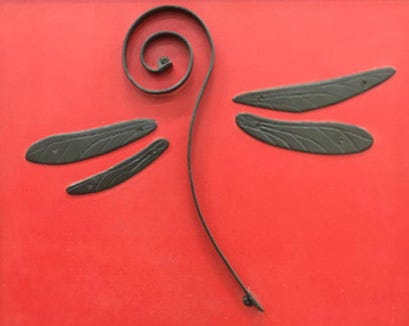
PANELISTS. Ernest Siva, also the longtime Morongo cultural adviser and tribal historian, has led Dorothy Ramon Learning Center for more than 20 years, part of a lifetime of saving and sharing Southern California Native American languages, culture, history, and music and other traditional arts. Mary Ann Andreas, who has served on the Morongo Tribal Council for nearly 40 years, is a nationally renowned advocate for tribal sovereignty and self-reliance. She has received Dorothy Ramon Learning Center’s Dragonfly Award for her soaring achievements in leadership and in saving and sharing cultural knowledge.
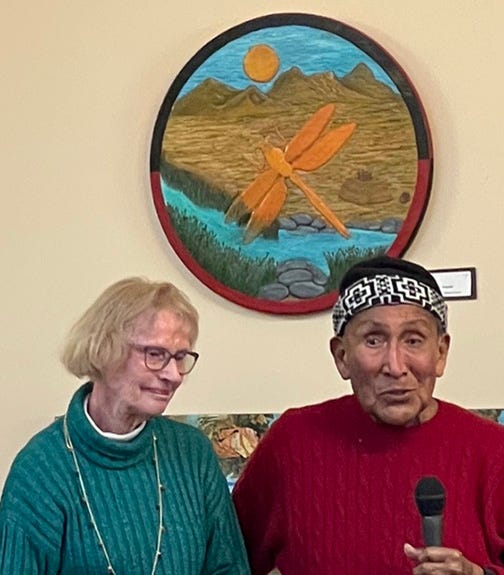
Reflections from Ernest Siva (Cahuilla-Serrano)
Editor’s note: At one of the early California Indian Cultural Awareness conferences in San Bernardino about 25 years ago, Ernest Siva spoke about why it’s so crucial to preserve and promote the languages, cultures, and history of Southern California’s Indigenous people. An excerpt leads us into Friday’s discussion:
“…Why should we be concerned with cultures and things of the past, especially of the Indians? After all, isn’t it hard enough to accommodate the meeting of requirements of public education? Perhaps some traditional knowledge will give some answers and insight as to ‘why’ we recall our Elders and their advice.
“Our instructions were simple and direct. At the end of the 19th century, Francisco Morongo, the older brother of Captain John Morongo, told the people that they were going to have to make some choices. He said that our younger brother was going to teach us a new way to live on this land. Younger brother was going to teach the Indian to speak, eat, worship, dress, and work like him. Francisco (Lamsa was his Indian name) did not learn English or Spanish. He told his people that he had his songs, his language, and his Indian ways. He was elderly and content with his life. He said to follow this new way because our way was ending. …Since the world was changing, the Indian had to change, too.
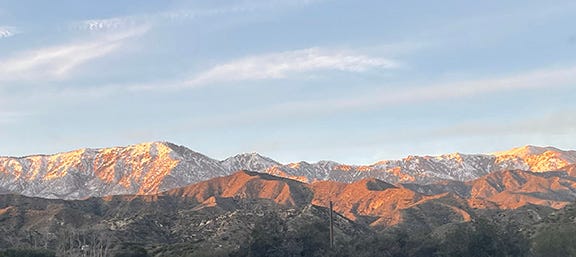
“However, the instructions to ‘NEVER FORGET WHERE YOU CAME FROM,’ and to ‘NEVER FORGET YOUR LANGUAGE,’ have hung over us like the blue sky as experienced in the mountains: pure and eternal.
“This explains why, when we would see our cousin Louie Marcus in town (Banning, California), he would always speak to us in Serrano. This man knew several Indian languages. We would be in town, which is a pretty big deal, on our way to the movies.
“He would say: ‘Qay omi’ omi’ meewerraftii.’ ‘Don’t forget your language. Don’t forget your people.’
“At San Manuel, a similar experience was to be had. Dolores Crespin Manuel, a contemporary of San Manuel Elder Francis De Los Reyes advised: ‘…But, never forget who you are or where you came from. Always remember we were here, and they came.’”
Thank you!
As always, thanks for reading, sharing, and subscribing to News from Dorothy Ramon Learning Center, your free online newsletter. You’ll be seeing this newsletter more often in 2026. Share your ideas: PLEASE EMAIL Editor Pat Murkland.